In my opinion, Critical digital literacy is the ability to use technology effectively to construct a literary text and use those texts to enhance one's learning. I think that critical means being able to apply what is being learned and absorb it in an analytical way questioning the validity and overall purpose of it.
I feel that the “critical” aspect of critical digital literacy is found when teaching and learning about digital literacy because everything should be questioned and done with purpose. When using a specific digital literacy it will not be beneficial in the long run using this technology would not engage students critically. In many ways digital literacy is both being beneficial yet in some cases disruptive to critically engage students. I tutor a young lady in grade eight and she asked me to give her spelling tests because she doesn’t do them in school. She also said with autocorrect always writing on a computer or texting she doesn’t know how to spell many words. She is given assignments when she is supposed to write something in class but she spends most of her time searching for the correct way to spell a word. With this too, her grammar when writing is fragmented because autocorrect tells her where to put commas and periods. Her entire learning experience with English revolves around the use of technology and this has both helped and hindered her.
The critical digital literacy model by Hinrichsen and Coombs supports my understanding of what critical digital literacy because the outline breaks down the different components and explains them in further detail which helped me to understand their concept of the critical digital literacy model. As well, their model shows that there needs to be a connection between the text and participant with a fluid exchange of concepts and ideas. As I mentioned earlier the girl I am tutoring is found in the middle of this disconnection. She does not connect to the texts because of the lack of effort required of her.
I found the 21st Century Framework the most applicable to my teaching style because the three components, reading, writing and, participation connect the many other parts of virtual learning. I think that the way this framework is outlined describes the important parts in which one way of learning is targeted.
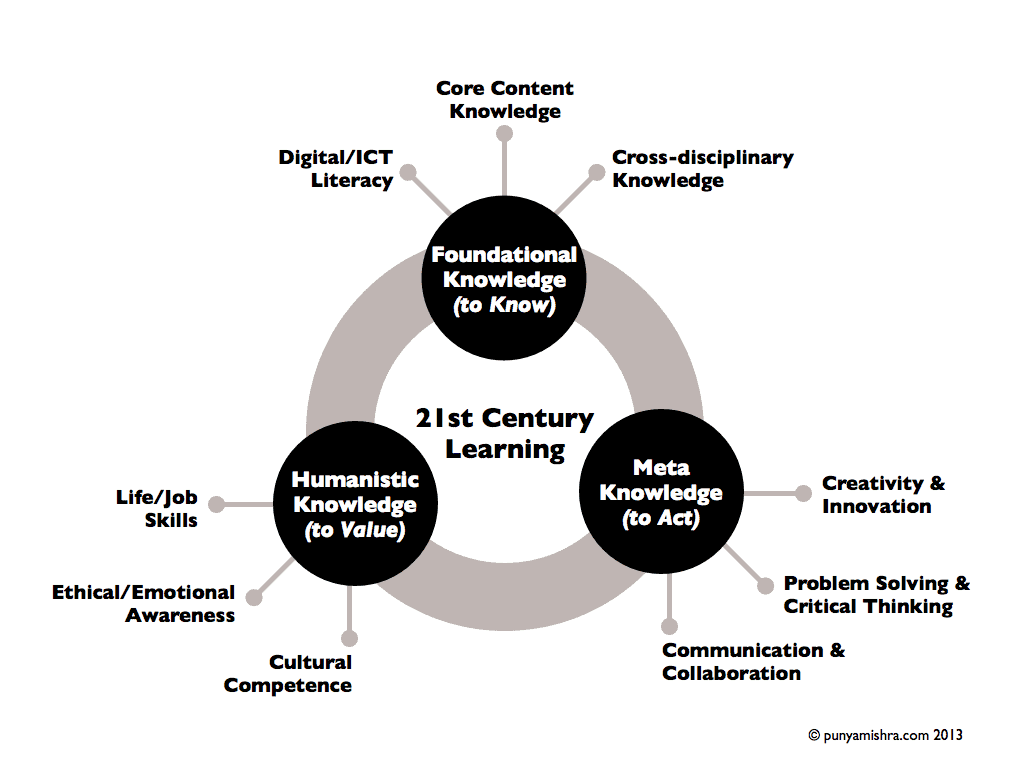
This framework applies to the current teaching and understanding because the teaching tools outlined in the graph represent the ways different technology platforms and tools are applied to learning and the aspects of how they relate to skills. The 21st Century Framework, in my opinion, is laid out the clearest. The spherical diagram outlines the overlapping between different skills and the graph shows the different platforms that best target certain areas. The different platforms are used to develop certain skills. for example, the use of interactive games can encourage cooperation, conflict resolution, curiosity, grit and perseverance, self-efficacy, initiative, problem-solving, reasoning, creativity, innovation, and critical thinking. Although this framework acknowledges many aspects of learning digitally it does not take into account that children with learning difficulties/disabilities may struggle more with these platforms making it more difficult to develop the many skills of a student. https://learning.mozilla.org/en-US/web-literacy
Comments
Post a Comment